Dental Implants vs Dental Bridges – Which Tooth Replacement Option Is Better?
Missing teeth can affect your smile, confidence, speech, and chewing ability. Modern dentistry offers several solutions to replace missing teeth, but the two most common options are dental implants and dental bridges.
If you are confused about which treatment is right for you, this guide will help you understand the differences, advantages, costs, durability, and ideal choice according to your dental condition.
At Dr. Mallick Dental Centre, Pitampura, we provide advanced tooth replacement treatments using modern technology and personalized treatment planning.
Why Replacing Missing Teeth Is Important
Many people ignore missing teeth, especially if they are not visible while smiling. However, untreated tooth loss can cause:
Difficulty chewing food
Bone loss in the jaw
Shifting of nearby teeth
Speech problems
Facial sagging
Reduced confidence
Replacing missing teeth early helps maintain oral health and facial structure.
What Are Dental Implants?
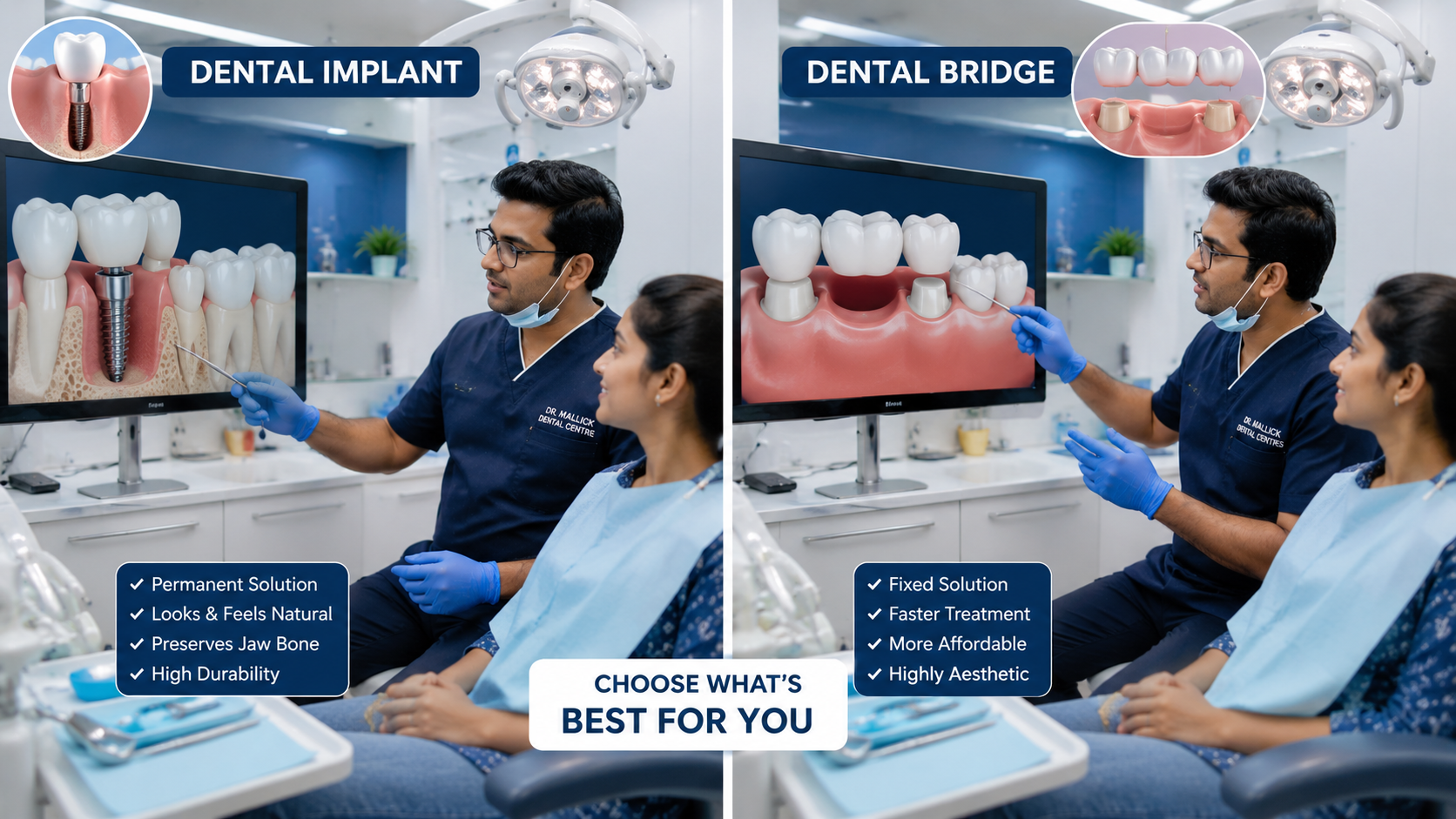
A dental implant is an artificial tooth root made of titanium that is surgically placed into the jawbone. After healing, a dental crown is fixed on top of the implant to restore the appearance and function of the missing tooth.
Dental implants look and function very similar to natural teeth.
Benefits of Dental Implants
Natural Appearance Implants closely resemble natural teeth in appearance and feel.
Long-Lasting Solution With proper care, dental implants can last for many years.
Prevents Bone Loss Implants stimulate the jawbone and help prevent bone shrinkage.
No Damage to Nearby Teeth Unlike bridges, implants do not require support from adjacent teeth.
Better Stability Dental implants remain fixed and stable while eating or speaking.
What Is a Dental Bridge?
A dental bridge is a restoration used to replace one or more missing teeth by taking support from nearby natural teeth.
The artificial tooth is attached between crowns placed on adjacent teeth.
Dental bridges are commonly used when implants are not suitable for the patient.
Benefits of Dental Bridges
Faster Treatment Bridges usually require less treatment time than implants.
Affordable Option Bridges are generally more budget-friendly initially.
Restores Smile and Function Bridges improve chewing ability and appearance effectively.
Non-Surgical Procedure Unlike implants, bridges do not require surgery.
Dental Implants vs Dental Bridges – Key Differences
Feature
Dental Implants
Dental Bridges
Procedure
Procedure
Non-surgical
Durability
Durability
Moderate lifespan
Bone Preservation
Bone Preservation
Does not prevent bone loss
Effect on Nearby Teeth
Effect on Nearby Teeth
Requires adjacent tooth support
Appearance
Appearance
Natural-looking
Healing Time
Healing Time
Faster
Stability
Stability
Good
Maintenance
Maintenance
Requires extra care under bridge
Which Option Is Better for You?
The right treatment depends on several factors:
Number of missing teeth
Jawbone condition
Overall oral health
Budget
Age and lifestyle
Treatment preference
Your dentist will evaluate your condition and recommend the best option.
Who Is a Good Candidate for Dental Implants?
You may be suitable for dental implants if you:
Have healthy gums
Have sufficient jawbone density
Maintain good oral hygiene
Want a long-term solution
Are medically fit for minor surgery
Who Should Consider Dental Bridges?
Dental bridges may be suitable if you:
Want faster treatment
Have insufficient jawbone
Prefer a non-surgical option
Need a lower-cost solution
Have healthy adjacent teeth
Cost Difference Between Dental Implants and Bridges
The cost varies depending on:
Number of teeth being replaced
Material used
Complexity of treatment
Additional procedures
Dentist’s expertise
Although dental implants may have a higher initial cost, they often provide better long-term value due to durability and stability.
How Long Do Dental Implants and Bridges Last?
Dental Implants
With proper care and regular dental visits, implants can last for decades.
Dental Bridges
Bridges generally last several years but may require replacement over time.
Proper oral hygiene plays a major role in treatment longevity.
Tips for Maintaining Tooth Replacements
Follow these oral care tips:
Brush twice daily
Floss regularly
Avoid chewing hard objects
Visit your dentist regularly
Maintain proper oral hygiene
Good maintenance improves the lifespan of both implants and bridges.
About Us
Dr Mallick Dental Centre LLP is an NABH ACCREDITED AND ISO 9001: 2015 Certified multi-specialty dental clinic in
We help patients restore healthy, natural-looking smiles with long-lasting treatment solutions.
Tips for Maintaining Good Oral Health
Follow these simple dental care tips:
Brush twice daily
Floss regularly
Avoid excessive sugary foods
Drink plenty of water
Visit your dentist regularly
Avoid smoking and tobacco
Good oral hygiene helps prevent major dental problems in the future.
Conclusion
Both dental implants and dental bridges are effective solutions for replacing missing teeth. Dental implants offer long-term durability and bone preservation, while bridges provide faster and more affordable treatment.
Choosing the best option depends on your oral condition, budget, and treatment goals. Consulting an experienced dentist can help you make the right decision for your smile and oral health.
Visit Dr. Mallick Dental Centre, Pitampura for expert consultation and advanced tooth replacement treatments in Delhi.